
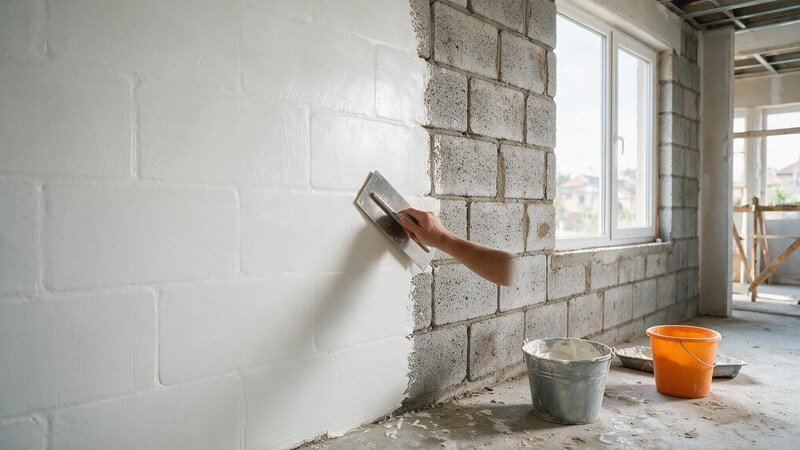
Interior Wall Plastering
Two-coat gypsum plaster on brick, block or concrete for a flat, paint-ready surface. The workhorse of residential and commercial construction.
Home / Applications / Wall Plastering
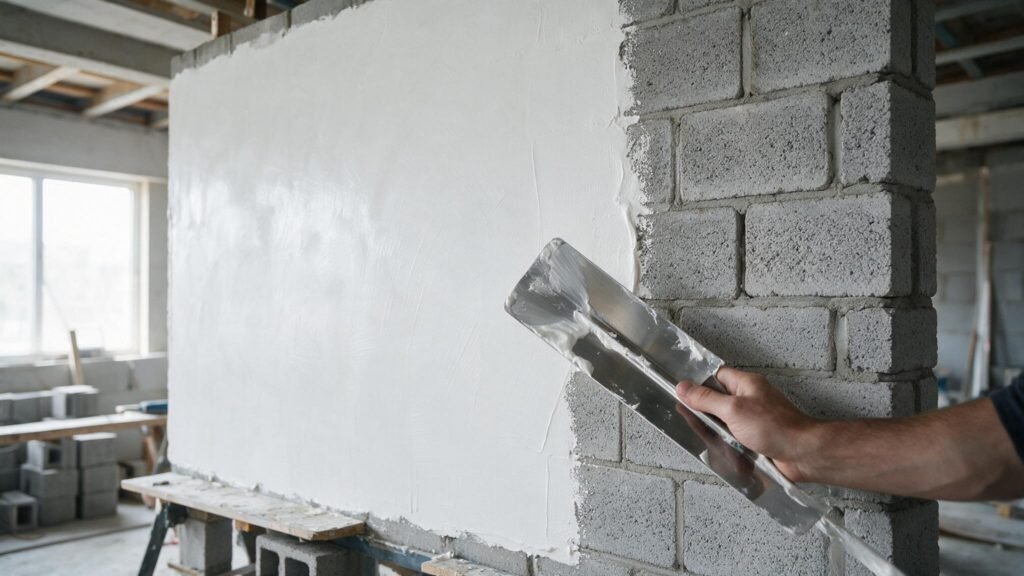
Gyraffe gypsum wall plastering delivers ultra-smooth, paint-ready surfaces on brick, block and concrete substrates. It is the preferred wall finishing system across Oman for its rapid set, excellent adhesion and crack-resistant finish.
Each system is formulated for its duty — from everyday interior plastering to premium decorative and fire-rated systems — and is proven on residential, commercial and hospitality projects.
Request a QuoteTwo-coat gypsum plaster on brick, block or concrete for a flat, paint-ready surface. The workhorse of residential and commercial construction.
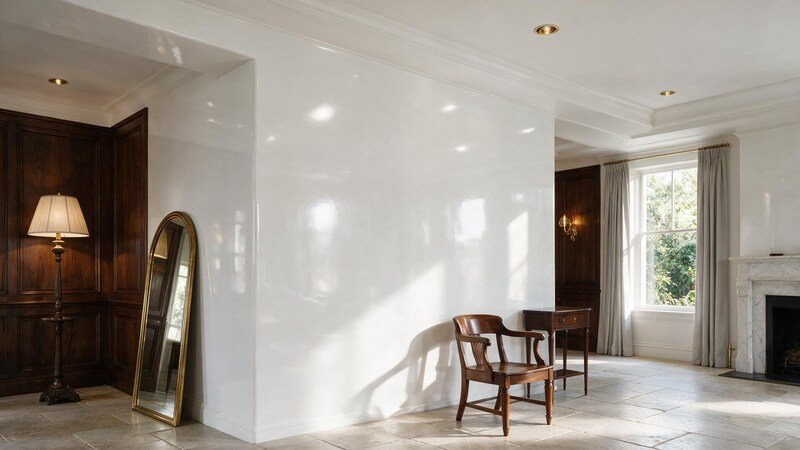
Premium finish plaster applied over base plaster for a high-gloss, mirror-smooth surface ideal for luxury interiors.
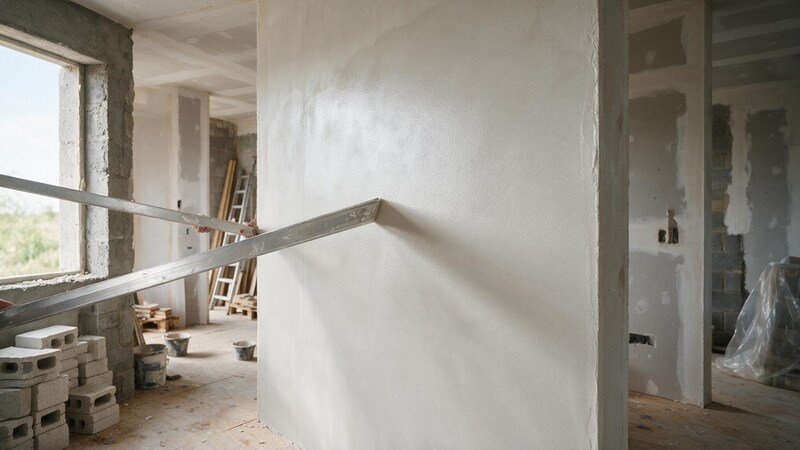
Fast, economical single-coat system for true, even substrates where speed of application is key.
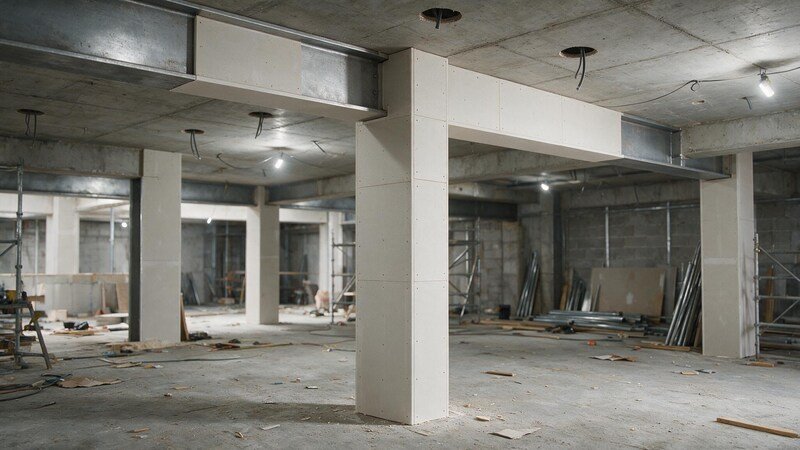
High-density gypsum plaster providing up to 4-hour fire resistance for columns, beams and service walls. Meets SBC and EN 1363.
The standard two-coat interior gypsum plastering system — the most widely used wall application across residential and commercial projects.
Check the substrate for soundness, suction and moisture. Remove dust, grease and loose material so the plaster bonds to a clean, stable base.
Moisture content must be below 5% and temperature under 38°C.
On smooth or low-suction substrates, apply a bonding agent to guarantee adhesion and prevent delamination.
Let the bonding agent become tacky before plastering.
Set vertical screeds at regular intervals as depth and level guides for a true, plumb finish.
Verify screeds are plumb with a spirit or laser level.
Apply the base coat between screeds, rule off to a true plane, then key the surface for the finish coat.
Rule off between screeds, then scratch-key for the finish.
Apply the thin finish coat and trowel smooth with a little clean water as it sets for a high-gloss, paint-ready surface.
Trowel smooth with water once it begins to set.
Protect from rapid drying, frost and heat while curing. Inspect for flatness before handover.
Allow a minimum of 7 days before painting.
Reference figures for the standard two-coat interior gypsum plaster system, with the tools used to apply and finish it.
Brick, block and RCC (concrete) internal walls, in a single-coat system.
No. Gyraffe wall plaster requires no water curing, so following trades can start once it has set and dried.
10 – 20 mm on walls with a maximum of 30 mm.